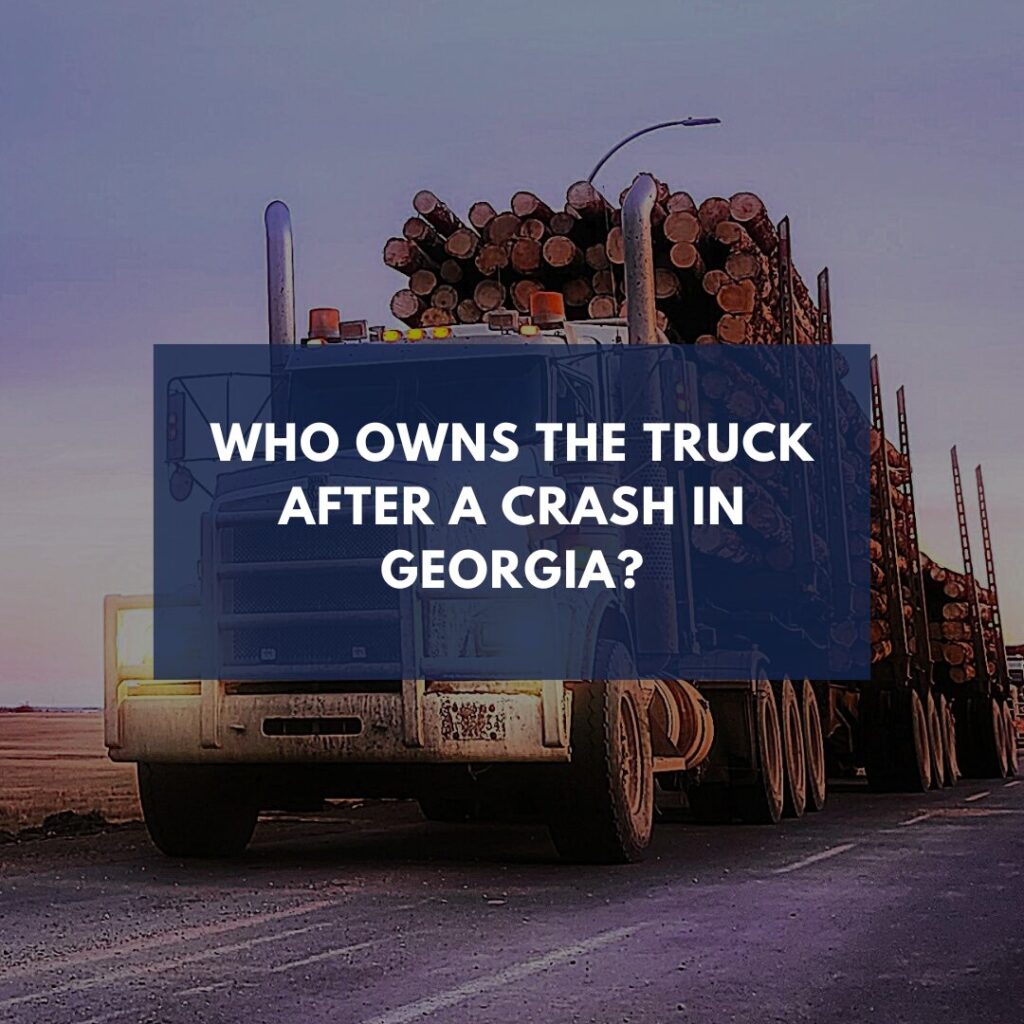
After a serious truck accident in Georgia, it’s natural for most people to assume that the company name on the truck or trailer is the one responsible for the crash. Unfortunately, it’s rarely that simple.
The trucking industry operates through a tangled web of ownership, leasing agreements, and carrier authority. A single truck might be owned by one business, leased to another, operated under a third company’s DOT number, and driven by an independent contractor. This complex web often allows trucking companies to deny responsibility and delay your truck accident claim.
At Brodie Law Group, our Georgia truck accident lawyers investigate these layers of ownership and control to uncover every company that shares legal responsibility for the truck crash. We break down how truck ownership, leasing structures, and carrier authority determine liability after a trucking accident in Georgia.
Why Truck Ownership Is So Complicated in Georgia’s Trucking Industry
Most commercial trucks operating on major Georgia interstates like I-75, I-285, and I-85 aren’t owned outright by one company. Instead, they’re tied up in a network of titles, registrations, and lease agreements.
A tractor may be titled in one company’s name, leased to another that handles dispatch, and pulling a trailer owned by a third entity. The cargo in the trailer might come from a shipper or broker who had a role in selecting the carrier.
These arrangements help carriers reduce costs and shift financial risk, but they also make it harder for accident victims to identify who’s responsible after a commercial truck crash. Without a thorough investigation, a key defendant (and their insurance coverage) could easily be missed.
This is why it is important to hire a truck accident lawyer if you’ve been injured in a Georgia truck accident. Experienced trucking attorneys know to sort through the DOT filings, digital logs, and lease documents to determine which company actually controlled the vehicle at the time of the collision.
Carrier Control and Liability Under Federal Law
Federal Motor Carrier Safety Administration (FMCSA) regulations require every commercial vehicle traveling interstate to operate under a motor carrier’s DOT authority. The carrier providing that authority must ensure:
- The vehicle is mechanically safe and inspected
- Drivers are qualified and properly trained
- Hours of Service limits are followed
- Trucks and trailers are maintained
- Required insurance coverage is active
- All FMCSA regulations are followed
Even if a carrier doesn’t own the truck or directly employ the driver, it’s still legally responsible for that vehicle once it operates under its DOT number. This means a carrier can’t escape liability just because the truck was leased or driven by an independent contractor. If a crash occurred under that carrier’s authority, they are responsible.
How Truck Leasing Works in Georgia
Different leasing arrangements affect liability in unique ways. Understanding which type of lease applies is key to identifying the correct defendants.
Long-Term Leases with Leasing Companies
Carriers may often lease tractors long-term from companies like Ryder or Penske. The carrier controls the truck’s operation, while maintenance responsibilities are usually shared. If a mechanical failure leads to a crash, both the leasing company and the carrier may be held liable. That’s why it matters to review maintenance failure & FMCSA violations to see whether inspections, repairs, or safety compliance were ignored.
Owner-Operator Lease-On Agreements
Many trucks traveling through Georgia are operated by owner-operators who lease their rigs to larger carriers. The carrier supplies loads and dispatch, while the owner-operator provides the tractor. Even though the driver is self-employed, the carrier often remains responsible under owner-operator lease-on agreements.
Short-Term Rentals
When carriers temporarily rent a tractor or trailer, liability often overlaps. The rental company may be responsible for maintenance or defective parts, while the truck carrier remains liable for supervision and safety compliance.
How Attorneys Determine Who Can Be Sued After a Truck Crash in Georgia
A successful trucking investigation examines more than just ownership. It focuses on who had control at the time of the crash and who played a role in putting that truck on the road.
Key questions include:
- Who had operational control of the truck?
- Whose DOT number was displayed on the vehicle?
- Who hired or contracted the driver? Whether negligent hiring was a factor?
- Who was responsible for maintenance?
- What does the lease agreement say about safety and insurance?
- Were brokers or shippers involved in assigning the load?
Each of these key questions reveal another potential source of compensation for your injuries. Our lawyers use these answers to identify every liable company and every available insurance policy that may be responsible for the truck accident.
Why Trucking Companies Try to Avoid Liability
After a serious collision, it’s common to hear excuses like:
- “The truck was leased.”
- “The driver was an independent contractor.”
- “We don’t own the equipment.”
These statements are designed to confuse injured victims and minimize accident payouts. FMCSA regulations were written to stop carriers from hiding behind contracts. If a truck operates under a carrier’s authority, that carrier should be legally responsible for its operation.
Examples of How Truck Ownership Affects Liability
Example 1: A leased truck with defective brakes
Both the leasing company and the carrier may be liable if maintenance duties were shared.
Example 2: An owner-operator violating Hours of Service
The carrier that dispatched the load can be held responsible for failing to monitor compliance with Hours-of-Service.
Example 3: A rental truck with hidden mechanical issues
The rental company may share liability for negligent inspection or maintenance.
Example 4: A broker selecting an unsafe carrier
If the broker’s decision contributed to the crash, they can face negligent hiring claims.
These situations are common in Georgia trucking litigation and can often increase the total compensation available to truck accident victims.
Why Identifying the True Owner Maximizes Compensation
Finding out who truly owned, leased, or operated the truck is critical because it determines:
- How many insurance policies may apply
- Whether multiple companies can be sued
- Whether umbrella or excess coverage exists
- Whether punitive damages can be pursued
Truck accident cases often involve hidden layers of insurance due to the many entities that may be involved. A trucking accident claim’s value often rises dramatically once every responsible entity is identified. Our truck accident law firm knows how to follow the paper trail, identify every responsible party and expose every layer of liability.
Common Truck Ownership and Liability Questions
Q: Can a trucking company deny responsibility if it doesn’t own the truck?
A: No. Under FMCSA regulations, the carrier operating under its DOT number is responsible, even if it doesn’t own the vehicle.
Q: Can I sue both the carrier and the driver?
A: Yes. Both may share liability if their negligence contributed to the crash.
Q: How do I find the DOT number of a truck after an accident?
A: The DOT number is displayed on both sides of the cab. It can be traced through the FMCSA’s SAFER database.
Q: What if the truck was hauling freight for a broker?
A: Brokers may share liability for negligent hiring if they failed to ensure the carrier was safe or compliant.
Contact a Georgia Truck Accident Lawyer
Determining who owns the truck and who’s responsible for your injuries requires a detailed investigation into:
- Leasing agreements
- DOT authority
- Maintenance logs
- Driver records
- Dispatch data
- Insurance policies
At Brodie Law Group, our experienced Georgia truck accident attorneys have handled trucking cases across Georgia. We know how to uncover every company that may be liable to maximize your recovery for your injuries.
Call (478) 239-2780 or contact us online for a free injury case evaluation today.