When a truck accident occurs in Georgia, the stack of insurance layers behind the trucking company and its driver play a critical role in determining the total compensation available to an injured victim.
Trucking collisions often involve catastrophic injuries, permanent disability, and massive financial losses. These damages can easily exceed the limits of a single policy, especially in serious Georgia truck accident cases. That’s why an experienced Georgia truck accident lawyer must identify every potential layer of insurance, including those carried by the motor carrier, its driver, leasing companies, brokers, shippers, and other entities connected to the commercial truck.
Unlike most car accidents, where a single auto policy is often the only source of coverage, commercial trucking cases may involve multiple policies totaling several million dollars or more. If these layers are not uncovered, injured victims are often limited to the minimum coverage amount, leaving them without the resources they need for the long-term recovery and future medical care for their injuries.
Below, our Georgia trucking attorneys explain:
- What “insurance layers” are in a truck accident case
- The 7 major types of policies that may apply
- How those layers can dramatically increase your settlement
- How lawyers in Georgia actually find hidden coverage
What Are Insurance Layers in a Georgia Truck Accident Case?

Insurance layers are the stack of different insurance policies that may provide coverage for a single trucking crash.
In a typical car wreck, there might be only one auto policy that matters. In a serious trucking collision, there may be:
- A primary liability policy on the truck
- One or more excess policies
- A corporate umbrella policy
- Owner-operator or driver policies
- Leasing company coverage
- Broker and shipper policies
- An MCS-90 endorsement as a federal back-up
Each layer can add hundreds of thousands or even millions of dollars in available insurance coverage, but you have to know where to look and how to prove it applies under Georgia law.
The 7 Insurance Layers That Can Increase Your Settlement
1.Primary Liability Insurance for Commercial Trucks
Primary liability is the first layer of insurance for motor carriers operating commercial trucks in interstate commerce. Federal law requires carriers to carry certain minimum limits.
Most carriers have:
- FMCSA minimum: $750,000
- More commonly: $1 million
- Higher limits: for trucks hauling hazardous materials or specialized freight
Primary liability typically covers:
- Bodily injuries
- Medical bills
- Property damage
- Wrongful death
While essential, primary liability rarely covers the full value of cases involving severe injuries with extensive surgeries. In Georgia, many motor carriers or insurers try to push early low-ball settlements based only on primary limits without considering possible future medical costs or treatment. That is why a thorough Georgia truck accident investigation must be conducted in every trucking case. The attorney must identify every possible party and additional insurance layer before negotiations even begin because stopping at the primary policy can be a costly mistake.
Georgia note: When the trucking company is a motor carrier and the case qualifies, Georgia allows a direct action against the motor carrier and its insurer. This means the insurer can be sued directly.
2. Excess Liability Coverage
Excess liability coverage is the next major layer. These policies come into play after the primary liability limits are exhausted.
Mid-size and large trucking companies frequently carry excess coverage of:
- Additional $1 million to $5 million
- Sometimes $10 million or more
- Often insured through a different company
Excess policies often cover catastrophic injuries such as traumatic brain injuries, spinal cord injuries, paralysis, amputations, and wrongful death.
Excess insurers aren’t always required to disclose coverage voluntarily, but in Georgia, attorneys can use O.C.G.A. § 33-3-28 to demand written disclosure of all known liability policies that may provide coverage.
3. Corporate Umbrella Policies
Umbrella policies sit above both primary and excess insurance and often apply across an entire corporate family or multiple subsidiaries.
Umbrella coverage commonly includes:
- $5 million to $25 million in added protection
- Broad definitions of who or what is an insureds
- Potential “drop down” coverage if another coverage doesn’t apply
Umbrella layers are especially important when:
- Multiple injured victims are involved
- Damages exceed primary and excess limits
- Poor corporate-level decisions (hiring, training, supervision, safety policies) contributed to the crash
- Large trucking or logistics companies are defendants
4. Owner-Operator and Driver Policies: NTL, Bobtail, and Other Driver-Based Policies
A significant percentage of tractor-trailers in Georgia are operated by owner-operators, who may carry their own policies such as:
- Non-trucking liability (NTL)
- Bobtail coverage
- Occupational accident coverage
- Independent contractor commercial policies
These layers may apply when:
- A driver was off-dispatch, but still operating the truck
- The carrier disputes whether the trip was “in the business of” the company
- The owner-operator contributed to the crash through independent negligence
NTL and bobtail policies contain major exclusions and usually do not apply when a driver is “in the business of” the motor carrier, which is exactly when most crashes occur. Still, in the right scenario, they may provide an additional layer of coverage.
Because motor carriers often misclassify drivers as independent contractors, attorneys must examine the contract and the actual working relationship. Georgia courts look at the right to control, not just the “independent contractor” label.
5. Leasing Company and Rental Company Coverage
Many carriers lease tractors or trailers from third party companies and these relationships can create additional insurance layers when:
- The leasing company was responsible for maintenance
- A mechanical defect contributed to the crash
- Inspections were negligently performed
- Equipment failures resulted from poor maintenance
Examples include brake failures, tire blowouts, and steering or suspension defects.
A leasing company’s insurance doesn’t automatically apply just because its name is on the title. Your truck accident attorney must prove negligence in inspection, maintenance, or repair before that coverage becomes part of your available insurance stack.
6. Broker and Shipper Liability Policies
Freight brokers and shippers may carry high-value policies that apply when they:
- Negligently hired a carrier with safety issues
- Failed to verify critical safety information
- Pressured drivers to meet unsafe deadlines
- Provided unsafe loading instructions
- Participated in negligent hiring by trucking companies
Possible policy types include general liability, contingent liability, professional liability, and corporate umbrella policies.
A broker or shipper is not liable just because it was involved. There must be independent negligence on their part. But when that negligence exists, these high-limit corporate policies can significantly increase the money available in a Georgia trucking settlement.
7. The MCS-90 Endorsement
The MCS-90 is not an insurance policy and is not stackable coverage. Instead, it is a federal guarantee ensuring at least $750,000 – $1 million is available when no other collectible insurance applies.
It comes into play when:
- An insurer denies coverage based on a policy exclusion
- A policy does not apply to the specific trip
- No other insurance meets federal requirements
- A judgment is entered against the motor carrier
MCS-90 does not add millions in extra coverage. It ensures that federal minimums are available to the injured victim, and the insurer can later seek reimbursement from the trucking company.
Why Identifying Insurance Layers Matters in Georgia Trucking Cases
Uncovering every potential layer of coverage increases the compensation available for:
- Long-term medical treatment
- Rehabilitation and therapy
- Permanent disability
- Lost earnings and diminished capacity
- Pain and suffering
- Lifetime care
- Wrongful death damages
Without uncovering the full insurance stack, victims often recover far less than Georgia law allows. That is why anyone who is injured in a truck accident in Georgia needs to hire a truck accident lawyer to help them recover all the compensation they may be entitled to for their injuries.
How Georgia Trucking Attorneys Identify Hidden Insurance Policies
Experienced trucking lawyers use multiple tools, including:
- Written disclosure demands under O.C.G.A. § 33-3-28
- Direct pleadings
- Subpoenas to insurers and corporate entities
- Review of maintenance contracts and lease agreements
- Analysis of bills of lading and broker-carrier agreements
- Downloading telematics and ECM black box data
- Identifying all shippers, warehouses, and logistics companies involved
Speak With a Georgia Truck Accident Lawyer
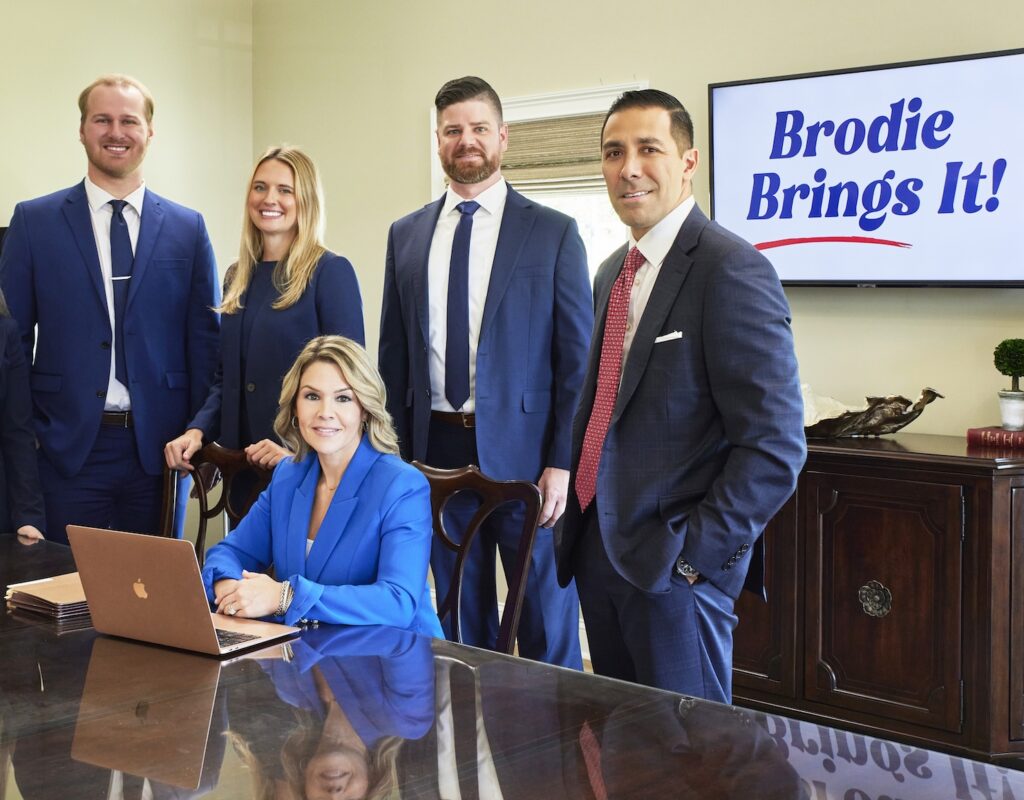
If you were seriously injured in a trucking accident, you may be entitled to far more compensation for your Georgia truck accident claim. Brodie Law Group makes sure every insurance layer is identified and every responsible party is held accountable to ensure your future medical needs are taken care of.
Our team knows how to uncover hidden coverage, preserve the evidence that matters, and build a case that forces trucking companies and its insurers to take responsibility.
Call us today at (478) 239-2780 to schedule a consultation with a Georgia truck accident attorney.